Top 20 Data Scientist Interview Questions & Answers in 2026
The data science landscape is evolving at breakneck speed. In 2026, companies aren’t just looking for someone who can build a model—they need hybrid thinkers who blend machine learning expertise with business acumen, ethical awareness, and real-time decision-making skills. Whether you’re a seasoned ML engineer pivoting into data science or a fresh graduate from a bootcamp, mastering these 20 questions will set you apart from the competition.
Below are the most common and toughest interview questions for Data Scientist roles in 2026, curated from recent hiring trends at top tech firms, FAANG+ companies, and high-growth startups. We cover behavioral, technical, situational, and role-specific questions—with sample answers and common pitfalls to avoid.
## 1. “Walk me through your approach to solving a new data science problem.”
Why the interviewer asks this:
They want to see your structured thinking and how you handle ambiguity. Data science is rarely about applying a single algorithm; it’s about framing the right problem.
Sample answer:
“I always start with business understanding—clarifying the goal, success metrics, and constraints. Then I perform exploratory data analysis (EDA) to detect patterns, missing values, and potential biases. After that, I select a baseline model, iterate with feature engineering, and validate using cross-validation. Finally, I present results with clear visualizations and actionable recommendations.”
What to avoid saying:
“I just jump straight to building a neural network.” That signals you skip critical upfront work.
## 2. “Explain the bias-variance tradeoff in simple terms.”
Why the interviewer asks this:
This is a fundamental concept that separates junior from senior data scientists. They want to know if you can teach it to a non-technical stakeholder.
Sample answer:
“Bias is the error from oversimplifying a model—like using a straight line for a curvy relationship. Variance is the error from being too sensitive to training data noise—like a model that memorizes every outlier. The tradeoff is about finding the sweet spot where total error is minimized. In 2026, with massive datasets, we often lean toward slightly higher bias with strong regularization to avoid overfitting.”
What to avoid saying:
A purely mathematical definition without real-world context. Don’t just recite formulas.
## 3. “Tell me about a time you had to explain a complex model to a non-technical stakeholder.”
Why the interviewer asks this:
Communication is a top soft skill in 2026. Data scientists often present to executives, product managers, or clients who don’t know Python.
Sample answer:
“At my last role, I built a churn prediction model using gradient boosting. The VP of Sales wanted to know ‘why customers were leaving.’ I created a simple dashboard showing the top three drivers—usage frequency, support ticket volume, and contract length—using bar charts and plain English. I avoided accuracy metrics and focused on actionable insights, like ‘customers with fewer than 5 logins per month are 3x more likely to churn.'”
What to avoid saying:
“I used SHAP values and LIME explanations and showed them the feature importance plot.” That’s too technical for most non-technical audiences.
## 4. “How do you handle imbalanced datasets?”
Why the interviewer asks this:
Imbalanced data is ubiquitous—fraud detection, medical diagnosis, rare event prediction. They want to see your practical toolkit.
Sample answer:
“I first check the business cost of false positives vs. false negatives. Then I consider resampling techniques—SMOTE for oversampling or Tomek links for undersampling. I also use class weights in the loss function and evaluate using precision-recall curves instead of accuracy. In 2026, I often combine this with anomaly detection approaches for extreme imbalance.”
What to avoid saying:
“I just use random oversampling until the classes are equal.” That can lead to overfitting and unrealistic performance.
## 5. “What is the difference between supervised, unsupervised, and reinforcement learning?”
Why the interviewer asks this:
A classic foundational question. They want to confirm you know the landscape.
Sample answer:
“Supervised learning uses labeled data to predict outcomes—like regression or classification. Unsupervised learning finds hidden patterns in unlabeled data—like clustering or dimensionality reduction. Reinforcement learning involves an agent learning through trial and error by maximizing a reward signal. In 2026, we’re seeing more semi-supervised and self-supervised approaches that blend these paradigms.”
What to avoid saying:
“Supervised is when you have labels, unsupervised is when you don’t.” That’s too shallow—add context about real-world use cases.
## 6. “Describe a data science project you led from start to finish.”
Why the interviewer asks this:
They want evidence of ownership, problem-solving, and impact.
Sample answer:
“I led a project to reduce inventory waste for an e-commerce client. I started by gathering historical sales data and warehouse logs. After EDA, I built a time series model using Prophet with external features like holidays and promotions. The model cut overstock by 18% and saved $2M annually. I also created a monitoring dashboard for the operations team to track predictions in real-time.”
What to avoid saying:
“I was part of a team that built a model.” That’s too vague—they want your specific contributions.
## 7. “How do you prevent overfitting in a deep learning model?”
Why the interviewer asks this:
Overfitting is a constant battle in modern data science, especially with large neural networks.
Sample answer:
“I use a combination of regularization techniques: L1/L2 regularization, dropout layers, early stopping based on validation loss, and data augmentation. I also ensure the model’s capacity matches the dataset size. In 2026, I often use cross-validation with stratified sampling and monitor training curves closely.”
What to avoid saying:
“I just add more data.” That’s not always feasible—show you have multiple tools.
## 8. “Explain the concept of p-value and its limitations.”
Why the interviewer asks this:
Statistical literacy is critical. They want to know you understand inference beyond machine learning.
Sample answer:
“A p-value measures the probability of observing your results (or more extreme) if the null hypothesis is true. A low p-value suggests evidence against the null. However, p-values are often misused—they don’t measure effect size or practical significance. In 2026, I prefer using Bayesian approaches or confidence intervals for richer interpretation.”
What to avoid saying:
“A p-value of 0.05 means there’s a 5% chance the null hypothesis is true.” That’s a common misinterpretation.
## 9. “How would you design an A/B test for a new feature?”
Why the interviewer asks this:
A/B testing is a core responsibility for many data scientists, especially in product roles.
Sample answer:
“I start by defining the primary metric (e.g., conversion rate) and the minimum detectable effect. Then I calculate sample size using power analysis. I randomize users into control and treatment groups, ensuring no contamination. I also set up peeking rules—using sequential testing or Bayesian methods to avoid false positives. After the test, I analyze results with a t-test or bootstrap.”
What to avoid saying:
“I just run the test for a week and check if p < 0.05." That's a recipe for bad decisions.
## 10. “What is feature engineering and why is it important?”
Why the interviewer asks this:
Feature engineering often matters more than model choice. They want to see your creativity.
Sample answer:
“Feature engineering is the process of transforming raw data into inputs that make machine learning algorithms work better. This includes creating interaction terms, binning, encoding categorical variables, extracting date components, and domain-specific aggregations. In 2026, with automated ML tools, the human edge is in crafting features that capture business logic—like ‘time since last purchase’ for churn models.”
What to avoid saying:
“I just use all the columns as-is.” That shows a lack of depth.
## 11. “Tell me about a time you disagreed with a colleague’s approach to a data problem.”
Why the interviewer asks this:
This is a behavioral question about conflict resolution and collaboration.
Sample answer:
“A colleague wanted to use a complex ensemble model for a simple regression task. I argued that a linear model with feature engineering would be more interpretable and faster to deploy. I ran a quick prototype showing both approaches had similar accuracy, and we agreed to use the simpler model for production. The key was backing my opinion with data.”
What to avoid saying:
“I told them they were wrong and went to the manager.” That shows poor teamwork.
## 12. “How do you handle missing data?”
Why the interviewer asks this:
Real-world data is never clean. They want to see your practical approach.
Sample answer:
“I first analyze the missing data mechanism—is it MCAR, MAR, or MNAR? For small amounts, I might drop rows or columns. For larger gaps, I use imputation: mean/median for numerical, mode for categorical, or more advanced methods like KNN imputation or MICE. In 2026, I also consider using models that handle missingness natively, like XGBoost.”
What to avoid saying:
“I just fill with zeros.” That can introduce severe bias.
## 13. “Explain the difference between bagging and boosting.”
Why the interviewer asks this:
Ensemble methods are essential in modern data science. They want to know you understand the mechanics.
Sample answer:
“Bagging (like Random Forest) trains multiple models in parallel on bootstrap samples and averages their predictions to reduce variance. Boosting (like XGBoost) trains models sequentially, each correcting the errors of the previous one, which reduces bias. In 2026, gradient boosting is often preferred for structured data due to its high performance.”
What to avoid saying:
“Bagging is for trees, boosting is for linear models.” That’s incorrect.
## 14. “How would you explain a neural network to a 10-year-old?”
Why the interviewer asks this:
They test your simplification skills—critical for cross-functional communication.
Sample answer:
“A neural network is like a team of detectives. Each detective looks at a small piece of a puzzle—like edges of a picture—and passes their findings to the next detective. The final detective makes a decision: ‘This is a cat.’ With practice, the team gets better at solving puzzles by adjusting how much each detective’s opinion matters.”
What to avoid saying:
“It’s a multi-layer perceptron with backpropagation.” That’s not for a 10-year-old.
## 15. “What is the role of a data scientist in 2026 compared to 2020?”
Why the interviewer asks this:
They want to see your awareness of industry trends and adaptability.
Sample answer:
“In 2020, data scientists spent 80% of their time cleaning data and building models from scratch. By 2026, AutoML and LLM-powered tools handle much of the modeling pipeline. The role has shifted to strategic thinking—defining problems, ensuring data quality, interpreting results for business decisions, and managing ethical risks. We’re now more like data translators between technical systems and business goals.”
What to avoid saying:
“It’s basically the same job.” That shows you’re out of touch.
## 16. “How do you evaluate the performance of a classification model?”
Why the interviewer asks this:
They want to see you go beyond accuracy.
Sample answer:
“I use a confusion matrix to understand true/false positives and negatives. For imbalanced data, I focus on precision, recall, F1-score, and AUC-ROC. I also consider business-specific metrics—like cost per false positive in fraud detection. In 2026, I often use calibration curves to ensure predicted probabilities match real-world frequencies.”
What to avoid saying:
“I just look at accuracy.” That’s rarely sufficient.
## 17. “Describe a time you made a mistake in a data science project.”
Why the interviewer asks this:
They want humility and learning ability—not perfection.
Sample answer:
“I once built a model without checking for data leakage—I had included future information in the training set. The model performed brilliantly in validation but failed in production. I caught it during monitoring, rebuilt the pipeline with proper time-based splits, and implemented a data validation step to prevent recurrence. The lesson was to always question data provenance.”
What to avoid saying:
“I never make mistakes.” That’s dishonest and arrogant.
## 18. “What is the difference between SQL and NoSQL databases, and when would you use each?”
Why the interviewer asks this:
Data access is a daily task for data scientists. They want to know you can work with different storage systems.
Sample answer:
“SQL databases (like PostgreSQL) are relational, structured, and enforce ACID properties—ideal for transactional data with clear schemas. NoSQL databases (like MongoDB or Cassandra) are flexible, schema-less, and scale horizontally—great for unstructured data like logs or real-time streams. In 2026, I often use SQL for analytics and NoSQL for raw data ingestion before transformation.”
What to avoid saying:
“NoSQL is always better because it’s faster.” That’s context-dependent.
## 19. “How would you approach a problem with very little labeled data?”
Why the interviewer asks this:
Labeled data is often scarce and expensive. They want to see your resourcefulness.
Sample answer:
“I would first explore transfer learning—using a pre-trained model from a similar domain. Then I’d consider active learning to prioritize the most informative samples for labeling. I’d also use data augmentation to artificially expand the dataset. In 2026, few-shot learning and LLM-based synthetic data generation are powerful alternatives.”
What to avoid saying:
“I can’t do anything without enough data.” That shows a lack of creativity.
## 20. “Where do you see data science heading in the next 3 years?”
Why the interviewer asks this:
They want to hire someone who is forward-thinking and invested in the field.
Sample answer:
“I see three major trends: AI governance becoming mandatory as regulations tighten, edge data science where models run on devices for real-time decisions, and causal inference gaining prominence over pure correlation. Data scientists will need to blend domain expertise with technical skills and ethical judgment. I’m particularly excited about the intersection of LLMs and traditional ML for hybrid systems.”
What to avoid saying:
“AI will take over all data science jobs.” That’s fear-mongering, not insight.
## Final Tips for Your 2026 Data Scientist Interview
- Prepare a portfolio of 2-3 end-to-end projects with clear business impact.
- Practice storytelling—every technical answer should tie back to value.
- Stay current with MLOps, LLM fine-tuning, and ethical AI frameworks.
- Use the STAR method (Situation, Task, Action, Result) for behavioral questions.
- Ask smart questions at the end about data infrastructure, team culture, and model monitoring.

Photo by Yan Krukau on Pexels
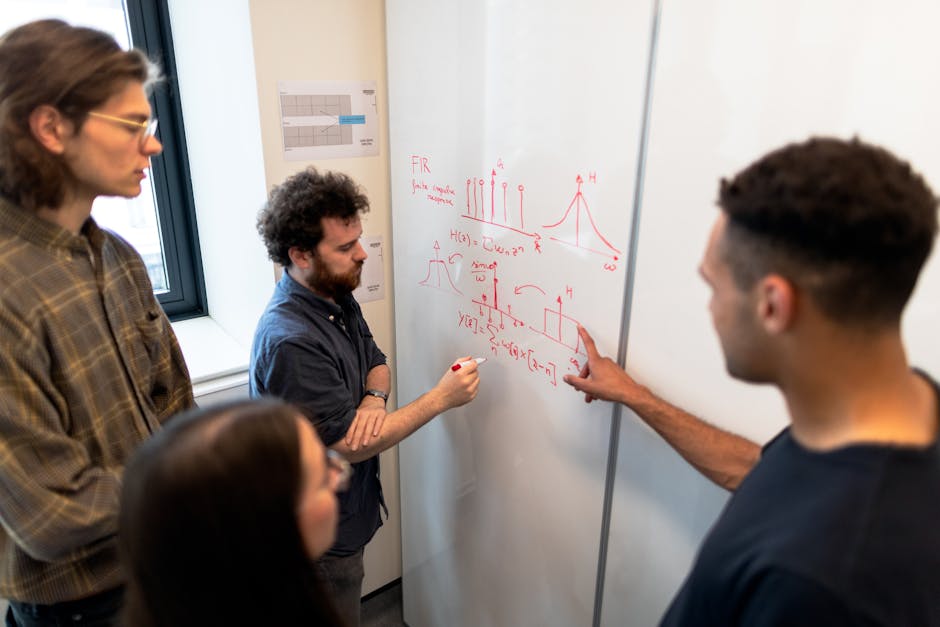
Photo by ThisIsEngineering on Pexels

Photo by RDNE Stock project on Pexels

Photo by Tima Miroshnichenko on Pexels
Ready to land your next role?
Browse live Data Scientist openings on hireplan.online—updated daily with top companies hiring in 2026. Download our free interview prep checklist and resume templates to stand out from the crowd.