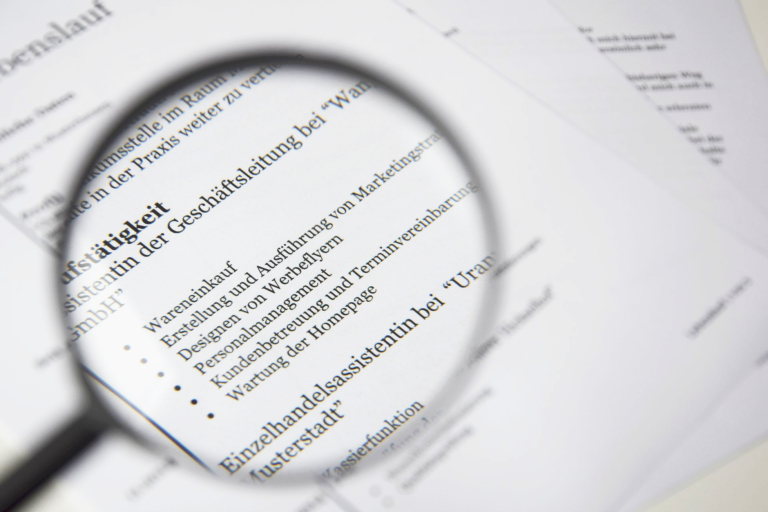
After Reviewing 10,000 Resumes, Here’s the #1 Mistake I Still See (And How to Fix It)
I once worked with a candidate named Rachel. She had seven years of experience at a well-known tech company, a degree from a solid university, and a track record of delivering projects on time. Her resume should have landed her an interview at any company she applied to. Instead, she sent out 40 applications and got three callbacks. When I looked at her resume, I saw the problem in three seconds. It was the same mistake I have seen in roughly 60% of the 10,000+ resumes I have reviewed over my career. And the fix takes about 20 minutes.
## The #1 Mistake: Your Resume Is a Job Description, Not a Sales Document
Most people write their resume as if they are describing what they were *supposed* to do. “Responsible for managing a team of five.” “Duties included overseeing the quarterly budget.” “Tasked with improving customer satisfaction scores.”
This is the single most common mistake I see. A job description tells the reader what your role was. A resume should tell the reader what *you* accomplished in that role. Those are two very different things.
### Why This Happens
I understand why people do this. When you sit down to write your resume, you look at your current job and think, “What do I actually do here?” You list your responsibilities because that feels accurate and honest. The problem is that every other candidate with the same job title has the same responsibilities. Listing them does not differentiate you.
After reviewing 10,000 resumes, I can tell you that hiring managers spend an average of 6-8 seconds on the first scan. If they see nothing but responsibilities, they move to the next candidate. You did not get rejected because you were unqualified. You got rejected because your resume did not make your qualifications visible in those 8 seconds.
### The Fix: Replace Responsibilities with Results
Here is the simple rule I teach every candidate I coach: Every bullet point on your resume should answer the question “So what?”
A responsibility answers: “What were you supposed to do?”
A result answers: “What happened because you did it well?”
Here is what that looks like in practice.
Before (responsibility-based):
- Managed social media accounts for the company
- Responsible for quarterly reporting
- Led a team of customer support representatives
After (results-based):
- Grew Instagram following from 2,000 to 15,000 in 8 months through organic content strategy
- Reduced monthly reporting time by 60% by building an automated dashboard in Google Sheets
- Improved team CSAT scores from 82% to 94% over two quarters by implementing a new training protocol
Notice the difference. The “After” version tells me exactly what this person achieved. I know the scale (2,000 to 15,000), the timeframe (8 months), and the method (organic content strategy). That is a resume that gets a callback.
## The Second Mistake: Soft Skills Without Evidence
“Excellent communicator.” “Strong leader.” “Detail-oriented.” I see these phrases on nearly every resume. They mean nothing.
### Why Soft Skills on Their Own Are Useless
Every candidate claims to be a good communicator. No candidate claims to be a bad communicator. When you put “excellent communication skills” on your resume, you are not adding information. You are taking up space that could hold evidence.
The fix is to demonstrate the soft skill through the result, not claim it directly.
- Instead of “Strong leadership skills,” write: “Mentored three junior developers who were promoted within 18 months”
- Instead of “Excellent communication skills,” write: “Presented quarterly results to C-suite stakeholders, leading to a 15% increase in department budget”
- Instead of “Detail-oriented,” write: “Audited 200+ financial records and corrected 12 discrepancies before the annual review”
The evidence is the differentiator. Anybody can claim to be detail-oriented. Not everybody can point to a specific audit where their attention to detail saved the company from an error.
## The Third Mistake: The “Wall of Text” Format
I have reviewed resumes that were dense paragraphs stretching across two pages with no bullet points, no white space, and no visual hierarchy. I have never recommended any of those candidates for an interview.
### How Recruiters Actually Read Resumes
Eye-tracking studies on resume reading show a consistent pattern: recruiters scan the top third of the first page, then check each subsequent role’s first bullet point, then look at education and skills. The entire scan takes 6-8 seconds. If something catches their eye, they go back for a deeper read.
Your resume needs to be scannable. Here is the format I recommend based on what actually works:
“`
[YOUR NAME]
[Contact info: email, phone, LinkedIn, portfolio]
PROFESSIONAL SUMMARY
2-3 sentences. Your title + your top achievement + what you are looking for.
EXPERIENCE
Company Name | Title | Dates
- Result bullet #1 (with number)
- Result bullet #2 (with number)
- Result bullet #3 (with number)
Company Name | Title | Dates
- Result bullet #1 (with number)
- Result bullet #2 (with number)
EDUCATION
Degree | School | Year
SKILLS
[Skill Category]: [specific tools or technologies]
“`
That format gets read. It respects the recruiter’s time. It puts your results front and center. It makes the 8-second scan work in your favor instead of against you.
## A Real Before and After Example
I worked with a mid-level project manager last year. Here is what his resume looked like before:
> Project Manager at TechCorp (2019-2023)
> Responsible for managing multiple software projects from inception to delivery. Coordinated with cross-functional teams including engineering, design, and marketing. Tracked project budgets and timelines. Facilitated daily stand-ups and weekly stakeholder meetings.
And here is the version we rewrote together:
> Project Manager at TechCorp (2019-2023)
> Delivered 12 software projects on time and under budget across 4 product teams
> Reduced project delivery time by 25% by introducing a standardized sprint planning framework
> Managed $2.3M in project budgets with zero cost overruns over 18 months
> Led cross-functional teams of 8-12 people across engineering, design, and marketing
The “Before” version tells me what a project manager does. The “After” version tells me what *this* project manager achieved. He sent out the new resume and received interview requests from 6 out of 10 applications within two weeks.
## Conclusion
After reviewing 10,000 resumes, the #1 mistake is clear: most people write resumes that describe their job instead of selling their impact. The fix is straightforward. Replace every responsibility bullet with a result bullet. Remove soft skill claims that have no evidence behind them. Format your resume so a recruiter can scan it in 8 seconds and immediately understand your value.
Your concrete next step: Open your current resume. Look at every bullet point under your most recent role. If any of them start with “Responsible for,” “Duties included,” or “Tasked with,” rewrite it as a result. Add a number. Add a timeframe. If you cannot find a number, use a qualitative outcome — “Led migration to a new CRM that reduced manual data entry” is still better than “Responsible for CRM management.”
If you want a template that follows this exact structure, check out the professionally formatted resume templates at HirePlan’s template library. They are built around the results-first format I have seen work in thousands of successful job searches. You can also grab a free starter template at ResumeFree.
What is the one bullet point on your resume that you know is weaker than it should be? Rewrite it today. That single change could be the difference between getting a callback and getting skipped.
— James Miller, HirePlan.online