Top 20 Medical Lab Technician Interview Questions & Answers in 2026
If you’re preparing for a Medical Lab Technician (MLT) interview in 2026, you need to be ready for more than just textbook questions. The healthcare landscape is evolving rapidly—with automation, AI-assisted diagnostics, and a renewed focus on infection control post-pandemic. Based on current industry trends and recruiter feedback, these are the 20 most common and toughest interview questions for Medical Lab Technicians this year.
Below, you’ll find a complete guide with why interviewers ask each question, a strong sample answer, and what to avoid saying. Use these to practice, refine your responses, and land your next role.
## 1. Can you walk us through your experience with laboratory information systems (LIS)?
Why the interviewer asks this: Labs are increasingly digital. They want to know you can navigate LIS software efficiently, reduce data entry errors, and integrate with hospital EMR systems.
Sample answer: “In my previous role at City Hospital, I used Orchard Harvest LIS daily for accessioning, result entry, and quality control tracking. I also helped train new staff on troubleshooting common LIS issues, like mismatched patient IDs and pending result alerts. I’m comfortable adapting to new systems quickly.”
What to avoid: Don’t say you have no LIS experience if you do—even basic exposure counts. Avoid vague answers like “I used a computer.”
## 2. How do you ensure accuracy when running high-volume tests?
Why the interviewer asks: MLTs often process 50–100+ samples per shift. Accuracy under pressure is non-negotiable.
Sample answer: “I follow a strict three-point verification process: I check the patient label against the requisition form, confirm the test code in the LIS, and review any critical flags before releasing results. I also use barcode scanning to minimize manual entry errors.”
What to avoid: Avoid saying “I just double-check everything.” Be specific about your system.
## 3. Describe a time you caught a potential error before it reached a patient.
Why the interviewer asks: This is a behavioral question testing your attention to detail and willingness to act.
Sample answer: “I noticed a hemolyzed sample in a potassium test. Instead of releasing the result, I flagged it, recollected the sample, and documented the issue. The first result would have falsely indicated hyperkalemia. The physician later thanked me for preventing a misdiagnosis.”
What to avoid: Don’t say you’ve never made or caught an error—everyone has. Avoid blaming others.
## 4. What steps do you take when a control sample is out of range?
Why the interviewer asks: This tests your technical troubleshooting and understanding of quality control protocols.
Sample answer: “First, I do not report any patient results until the issue is resolved. I check the control lot number, expiration date, and storage conditions. Then I recalibrate the instrument and run a new control. If it fails again, I contact the manufacturer and document everything per CLIA guidelines.”
What to avoid: Avoid saying “I just repeat the test.” Show you understand systematic troubleshooting.
## 5. How do you handle a physician who questions your lab results?
Why the interviewer asks: Interpersonal skills matter. They want to see you can maintain professionalism under scrutiny.
Sample answer: “I listen without interrupting, then explain the quality control steps we took. If the physician remains concerned, I offer to rerun the test or check the sample integrity. I always remain respectful—our shared goal is patient safety.”
What to avoid: Don’t get defensive or say “The machine is always right.” Avoid dismissing their concern.
## 6. What is your experience with automated hematology analyzers?
Why the interviewer asks: This is role-specific. They need to know you can operate and maintain core lab equipment.
Sample answer: “I have three years of experience with the Sysmex XN series and Abbott CELL-DYN Sapphire. I can perform daily maintenance, troubleshoot flags like platelet clumps or nucleated RBCs, and review scatter plots to confirm results.”
What to avoid: Don’t overstate your experience. If you’re a new grad, mention your clinical rotation.
## 7. How do you prioritize tasks when multiple STAT orders come in?
Why the interviewer asks: This is a situational question about time management in a fast-paced lab.
Sample answer: “I triage by clinical urgency and turnaround time requirements. For example, a cardiac troponin STAT takes priority over a routine CBC. I also communicate with the nursing team to manage expectations and ask for help if needed.”
What to avoid: Avoid saying “I just do them one at a time.” Show you can think strategically.
## 8. Explain the difference between sensitivity and specificity in a diagnostic test.
Why the interviewer asks: This tests your fundamental medical knowledge and ability to explain concepts clearly.
Sample answer: “Sensitivity measures how well a test identifies true positives—people who actually have the disease. Specificity measures how well it identifies true negatives. A highly sensitive test is good for screening, while a highly specific test is better for confirmation.”
What to avoid: Don’t just recite definitions. Show you understand their clinical application.
## 9. How do you stay current with new lab techniques and regulations?
Why the interviewer asks: The field evolves quickly. They want a lifelong learner.
Sample answer: “I subscribe to ASCP’s Lab Medicine journal, attend quarterly webinars, and completed a continuing education course on molecular diagnostics last year. I also review CLIA updates monthly.”
What to avoid: Avoid saying “I don’t have time.” Mention specific resources.
## 10. Describe the proper procedure for handling a needlestick injury.
Why the interviewer asks: Safety is paramount. This tests your infection control knowledge.
Sample answer: “Immediately wash the site with soap and water, report the incident to my supervisor, and go to employee health for evaluation. I would also document the exposure and follow up on any required testing or prophylaxis.”
What to avoid: Don’t downplay the risk or say “I’ve never had one.” Show you know the protocol.
## 11. What is your experience with molecular diagnostics or PCR testing?
Why the interviewer asks: Molecular testing is a growth area in 2026, especially for infectious disease and oncology.
Sample answer: “I have hands-on experience with real-time PCR using the Bio-Rad CFX96 system. I can perform RNA extraction, set up master mixes, and interpret amplification curves. I also understand contamination prevention techniques like using separate pre- and post-amplification areas.”
What to avoid: If you have no experience, don’t lie. Instead, say “I studied it in school and am eager to learn.”
## 12. Tell me about a time you had to work with a difficult colleague.
Why the interviewer asks: This is a behavioral question testing teamwork and conflict resolution.
Sample answer: “A colleague consistently left shared workstations messy. I privately said, ‘I noticed we both get busy, but could we agree to clean up after each shift?’ They appreciated the direct approach, and we started a simple checklist. It improved our workflow.”
What to avoid: Don’t trash the colleague or say “I went to the manager immediately.” Show you tried to resolve it first.
## 13. How do you handle a situation where you’re asked to perform a test you’re not trained on?
Why the interviewer asks: This tests your ethical boundaries and safety awareness.
Sample answer: “I would politely say, ‘I’m not currently competent in that test, but I’m happy to learn under supervision.’ I would never perform a test I’m not trained on—it’s a patient safety risk and a regulatory violation.”
What to avoid: Avoid saying “I’ll figure it out.” That’s dangerous. Also avoid “I refuse”—be collaborative.
## 14. What is the most important quality for a Medical Lab Technician?
Why the interviewer asks: They want to know your professional values.
Sample answer: “Attention to detail is the most important quality. A single mislabeled sample or decimal error can lead to a misdiagnosis. Everything we do directly impacts patient care, so precision must be a habit, not an afterthought.”
What to avoid: Avoid generic answers like “hard work” or “being nice.” Be specific to the role.
## 15. How do you handle a power outage or equipment failure during a test run?
Why the interviewer asks: This is a situational question about crisis management.
Sample answer: “I immediately stop the run, document the time and sample IDs, and notify my supervisor. If the samples are stable, I store them properly. Once power is restored, I recalibrate and restart. I also check the UPS battery backup to ensure it’s functional.”
What to avoid: Avoid saying “I wait for IT.” Show you take proactive steps.
## 16. What experience do you have with blood bank and transfusion services?
Why the interviewer asks: This is a specialized area many MLTs rotate through.
Sample answer: “I have six months of blood bank experience, including ABO/Rh typing, antibody screening, and crossmatching. I understand the importance of checking patient history for previous antibodies and following AABB standards.”
What to avoid: If you lack experience, be honest but express willingness to train.
## 17. Describe a time you went above and beyond for a patient.
Why the interviewer asks: They want to see patient-centered thinking, even in a behind-the-scenes role.
Sample answer: “A pediatric patient needed multiple blood draws for a rare antibody workup. I coordinated with the phlebotomist to minimize the number of sticks by batching tests. The parents were grateful, and we got the results faster.”
What to avoid: Avoid saying “I don’t interact with patients.” Even indirect actions matter.
## 18. How do you handle repetitive tasks without losing focus?
Why the interviewer asks: Lab work can be monotonous. They need to know you maintain quality.
Sample answer: “I use rhythm and routine. I work in batches, take short breaks between large runs, and mentally check each step. I also rotate tasks with colleagues when possible to stay fresh.”
What to avoid: Avoid saying “I just power through.” That suggests burnout risk.
## 19. What do you think will be the biggest change in lab technology in the next five years?
Why the interviewer asks: This tests your industry awareness and forward thinking.
Sample answer: “I believe AI-assisted result interpretation will become standard. For example, algorithms that flag abnormal cell morphology or predict sample integrity. I’m excited to learn these tools, but I think the human touch—verifying and correlating with clinical context—will remain essential.”
What to avoid: Avoid saying “I don’t know” or giving a vague answer. Show you’ve thought about it.
## 20. Why do you want to work at our lab specifically?
Why the interviewer asks: They want to know you’ve done your research and are genuinely interested.
Sample answer: “I admire your lab’s commitment to rapid turnaround times and your investment in new molecular diagnostics equipment. I also see from your website that you prioritize staff development through certification support. That aligns with my career goals.”
What to avoid: Avoid generic answers like “I need a job.” Be specific to the organization.
## Final Tips for Your Medical Lab Technician Interview
- Prepare your STAR stories: Have 3–4 examples ready for behavioral questions (Situation, Task, Action, Result).
- Know your certifications: Be ready to discuss your ASCP, AMT, or CLS certification and any CEUs.
- Ask smart questions: Ask about their LIS system, staff-to-workload ratio, or continuing education support.
- Bring a portfolio: Include your resume, certifications, and a list of instruments you’ve operated.
- Dress professionally: Even if the lab is casual, wear business attire for the interview.
> Ready to put these answers into action? Browse live Medical Lab Technician openings on hireplan.online and find your next opportunity today.
[IMAGE_PROMPT: Medical lab technician in white coat using microscope in modern laboratory setting]
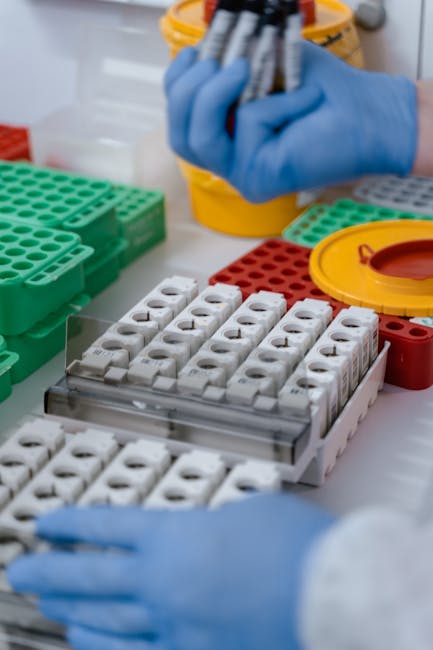
Photo by Tima Miroshnichenko on Pexels
[IMAGE_PROMPT: Medical lab technician reviewing digital results on computer monitor in clinical lab]
[IMAGE_PROMPT: Team of medical laboratory professionals wearing PPE and working together in clean lab environment]