Top 10 Interview Questions and How to Answer Them in 2027
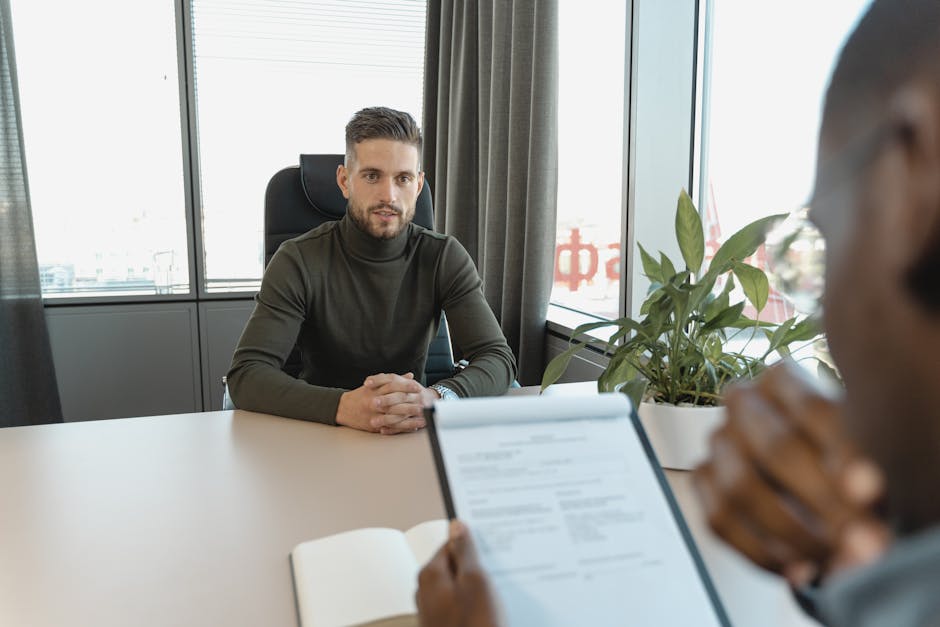
*Photo by Tima Miroshnichenko on Pexels*
Job interviews in 2027 have evolved. Behavioral questions dominate, technical assessments are more common, and many interviews include a remote component. Yet the core challenge remains the same: you have 30-60 minutes to convince someone you are the right person for the job.
This guide covers the most common interview questions in 2027 and a framework for answering any question effectively.
## The STAR Method: Your Interview Framework
Every behavioral answer should follow the STAR format:
- Situation — Set the context (1-2 sentences)
- Task — What needed to be done (1 sentence)
- Action — What you specifically did (2-3 sentences)
- Result — The outcome with metrics (1-2 sentences)
### STAR Example
Question: “Tell me about a time you resolved a conflict with a coworker.”
S: “On my previous team, two senior developers disagreed about which framework to use for a client project. The deadline was approaching, and the disagreement was blocking progress.”
T: “I needed to facilitate a decision that both parties could support without damaging team morale.”
A: “I scheduled a 30-minute meeting where each person presented their case for 10 minutes. I took notes and identified three criteria we all agreed on: speed, maintainability, and team experience. We scored each framework against these criteria.”
R: “We chose React unanimously based on the scoring. The project shipped on time, and both developers said the structured approach reduced tension. We adopted the same framework for future decisions.”

*Photo by cottonbro studio on Pexels*
## Question 1: “Tell Me About Yourself”
Why they ask: They want a 60-second summary of your career trajectory, not your life story.
The formula: Present + Past + Future
“Currently, I work as a [current role] at [company], where I [key responsibility]. Before that, I spent [X years] at [previous company] focusing on [relevant skill]. I am excited about this role because [specific reason related to the job posting].”
## Question 2: “What Is Your Greatest Weakness?”
Why they ask: They want self-awareness and evidence of growth.
The formula: Weakness + Action + Improvement
“I used to struggle with public speaking. When I joined my current role, I volunteered for three presentations to overcome it. I joined Toastmasters, recorded my practice sessions, and asked for feedback. Now I am comfortable presenting to groups of 50+ and even enjoy it.”
Do not use: “I work too hard” or “I am a perfectionist.” These are clichéd and interviewers see through them.
## Question 3: “Why Do You Want to Work Here?”
Why they ask: They want to see if you researched the company and genuinely care.
The formula: Company research + Personal alignment + Value add
“I have been following [Company]’s work in [specific area] since [event/product]. Your approach to [specific strategy] aligns with my experience in [relevant field]. I believe I can contribute by [specific contribution].”
## Question 4: “Describe a Challenge You Overcame”
Why they ask: They want to see problem-solving ability and resilience.
Prepare a story using STAR where:
- The challenge was significant but not caused by your mistake
- You took clear, logical action
- The outcome was positive and measurable
## Question 5: “Where Do You See Yourself in Five Years?”
Why they ask: They want to know if your career goals align with the role.
The formula: Growth direction + Role commitment + Learning goals
“I want to grow into a senior [role] who mentors junior team members. I see myself deepening my expertise in [specific area] and taking on more responsibility in [related skill]. This role is the ideal next step because it offers [specific growth opportunity].”

*Photo by Anna Shvets on Pexels*
## Question 6: “Why Did You Leave Your Last Job?”
Why they ask: They want to check for red flags and understand your motivation.
Positive framing only:
- “I am looking for more responsibility in [area]”
- “I want to work on [specific type of project]”
- “I am ready for the next challenge in my career”
Never say: Complaints about your previous boss, coworkers, or company culture.
## Question 7: “Tell Me About a Time You Failed”
Why they ask: They want humility, accountability, and learning ability.
The formula: Failure → Responsibility → Lesson → Change
“I launched a feature without enough user testing, and it had a 40% drop-off rate. I took responsibility and presented a post-mortem to the team. I implemented a user testing protocol that reduced drop-off on subsequent releases to under 10%. I learned that speed without validation is wasted effort.”
## Question 8: “How Do You Handle Pressure or Stress?”
Why they ask: They want to know if you can perform under deadlines.
Use a specific system:
“I prioritize using the Eisenhower Matrix — urgent vs. important. During high-pressure periods, I break large tasks into 25-minute Pomodoro sessions. I also communicate early if a deadline is at risk rather than waiting until the last minute.”
## Question 9: “Tell Me About a Time You Worked in a Team”
Why they ask: They want collaboration skills and conflict resolution.
Use STAR with emphasis on:
- Your specific contribution (not “we did”)
- How you handled disagreement
- The team outcome
## Question 10: “Do You Have Any Questions for Us?”
Why they ask: Good questions show genuine interest and preparation.
### Smart Questions to Ask
- “What does success look like in this role in the first 90 days?”
- “How does the team measure performance?”
- “What is the biggest challenge the team is currently facing?”
- “How would you describe the team culture?”
### Avoid These Questions
- “What does this company do?” (You should know)
- “How much vacation time do I get?” (Wait until offer stage)
- “Do I have to work late?” (Suggests you want minimum effort)

*Photo by Tima Miroshnichenko on Pexels*
## Interview Preparation Checklist
### The Night Before
Research the company (news, products, leadership)
Review the job description and match your experience
Prepare 3 STAR stories that highlight your key skills
Test your technology (if remote interview)
Charge your devices
Lay out your outfit
### 30 Minutes Before
Review your notes one more time
Test your microphone and camera
Find a quiet, well-lit space
Have water nearby
Silence your phone
### During the Interview
Smile and make eye contact (or look at the camera for remote)
Pause before answering difficult questions
Use STAR for behavioral questions
Ask 2-3 thoughtful questions
Take notes on what you learn
## Conclusion
Interviewing is a skill that improves with practice. Prepare 3-5 STAR stories that cover your key achievements, research each company thoroughly, and always have questions ready. The candidate who prepares the most wins — not the one with the most experience.
Bookmark this guide and review it before each interview. With the right preparation framework, you can walk into any interview with confidence.
*For more job search tips, resume guides, and career resources, visit hireplan.online.*